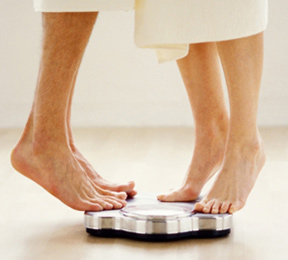
Losing weight is a lot more than calorie counting and doing endless
amounts of exercise. Although these things help, in reality it's a
little more complicated. If you're feeling stuck in a weight-loss rut
there are plenty of expert tips and industry secrets to help you on your
way. Whether you want to make your workouts work harder for you or find
smarter ways of eating healthily, this list of 30 ways to slim down
faster should help you toward your goal.
 Although it's good to get on in there with your weight loss,
making massive adjustments too fast can be counterproductive. So we
asked some fitness experts and nutritionists to give us the low down on
simple, small changes that you can do to your diet and exercise regime
to slim down quickly and effectively.
Although it's good to get on in there with your weight loss,
making massive adjustments too fast can be counterproductive. So we
asked some fitness experts and nutritionists to give us the low down on
simple, small changes that you can do to your diet and exercise regime
to slim down quickly and effectively.
 Although it's good to get on in there with your weight loss,
making massive adjustments too fast can be counterproductive. So we
asked some fitness experts and nutritionists to give us the low down on
simple, small changes that you can do to your diet and exercise regime
to slim down quickly and effectively.
Although it's good to get on in there with your weight loss,
making massive adjustments too fast can be counterproductive. So we
asked some fitness experts and nutritionists to give us the low down on
simple, small changes that you can do to your diet and exercise regime
to slim down quickly and effectively.
1. Healthy hydration
This might sound really obvious but eating healthily means drinking healthily too. There’s no point eating the right foods if you don’t drink the right liquids.
From simply drinking fizzy drinks or fruit juices with extra sugars it’s estimated that people are drinking an extra 200 calories per day then they think they are. So keep the cans of fizz to a minimum.
This might sound really obvious but eating healthily means drinking healthily too. There’s no point eating the right foods if you don’t drink the right liquids.
From simply drinking fizzy drinks or fruit juices with extra sugars it’s estimated that people are drinking an extra 200 calories per day then they think they are. So keep the cans of fizz to a minimum.
2 Keep your diet varied
The main area where a lot of diets slip up is not providing enough variety. If you do something day in day out, you get bored of it and it won’t be as easy to stick to.
Diet Chef’s Nutritionist and Weight Management Specialist, Izzy Cameron says: “The problem many of us have with dieting is that it can become repetitive and boring, meaning after a few weeks of feeling we are depriving ourselves we revert back to old habits and may binge on the wrong foods.”
So if you’re trying to slim down make sure you’re still eating a balanced, varied diet. In the long run you will probably lose much more weight.
The main area where a lot of diets slip up is not providing enough variety. If you do something day in day out, you get bored of it and it won’t be as easy to stick to.
Diet Chef’s Nutritionist and Weight Management Specialist, Izzy Cameron says: “The problem many of us have with dieting is that it can become repetitive and boring, meaning after a few weeks of feeling we are depriving ourselves we revert back to old habits and may binge on the wrong foods.”
So if you’re trying to slim down make sure you’re still eating a balanced, varied diet. In the long run you will probably lose much more weight.
3. Keep moving
An active lifestyle is essential for heart health, arthritis and staving off diabetes as well as lots of other health issues. But trying to fit in the 10,000 steps recommended per day to keep blood sugar levels from spiking isn't easy.
If you have a job where you're mainly sat around (which a large number of us do) then it can be extremely difficult. But doing small things like walking for 5mins at least every 2 hours can help keep your metabolism ticking over.
An active lifestyle is essential for heart health, arthritis and staving off diabetes as well as lots of other health issues. But trying to fit in the 10,000 steps recommended per day to keep blood sugar levels from spiking isn't easy.
If you have a job where you're mainly sat around (which a large number of us do) then it can be extremely difficult. But doing small things like walking for 5mins at least every 2 hours can help keep your metabolism ticking over.
Izzy says: "Exercise can definitely help with and accelerate weight
loss. However exercise does not mean signing up to expensive gym
memberships or having to hire a personal trainer, so don’t panic. Just
keeping active for at least 30 minutes a day can make a difference.
Perhaps walk to work instead of getting the bus…get off the bus a stop
earlier, take a stroll on your lunch break or go out for a bike ride or
do some gardening at the weekend. All these little steps will help
towards achieving your weight loss goals."
4. Starving yourself won't work
Losing weight 101. Skipping meals is nothing but bad news.
Nutritionist, Emma Wight-Boycott says: “Skipping meals is disastrous for weight loss! It has a three-pronged impact - firstly it causes blood sugar imbalance which makes us crave sugar or carbohydrates within 2 hours of our regular meal time. Secondly it makes our bodies burn muscle, not fat, for energy. Finally the body has its own 'food clock' (like a body clock for time) that regulates our metabolism and this becomes sleepy or sluggish when it is out of routine (think shift workers or jet lag)."
Losing weight 101. Skipping meals is nothing but bad news.
Nutritionist, Emma Wight-Boycott says: “Skipping meals is disastrous for weight loss! It has a three-pronged impact - firstly it causes blood sugar imbalance which makes us crave sugar or carbohydrates within 2 hours of our regular meal time. Secondly it makes our bodies burn muscle, not fat, for energy. Finally the body has its own 'food clock' (like a body clock for time) that regulates our metabolism and this becomes sleepy or sluggish when it is out of routine (think shift workers or jet lag)."
5. Eat regularly
As well as not skipping meals, you need to make sure you’re providing your body with the right amount of energy.
Emma says: “While its good to shake our body up with different intensities of exercise its best to keep our mealtimes regular. If you find skipping meals a tempting habit try having a combined protein and fat snack or small meal instead. Do this every 2-3hrs. Eat a boiled egg, a small handful of nuts or seeds, a protein drink or 100gm of meat or cheese. Add in certain vegetables and fruit and reduce carbohydrates especially refined ones; they are the weight loss enemy!”
As well as not skipping meals, you need to make sure you’re providing your body with the right amount of energy.
Emma says: “While its good to shake our body up with different intensities of exercise its best to keep our mealtimes regular. If you find skipping meals a tempting habit try having a combined protein and fat snack or small meal instead. Do this every 2-3hrs. Eat a boiled egg, a small handful of nuts or seeds, a protein drink or 100gm of meat or cheese. Add in certain vegetables and fruit and reduce carbohydrates especially refined ones; they are the weight loss enemy!”
6. You are what you eat
Nahid de Belgeonne, Founder of Good Vibes fitness studio says that she finds a really helpful way of keeping overeating under control is to remember that what goes into your body ultimately comes out where it counts.
"Remind yourself that everything you put into your mouth is processed to form your cells, that fried chicken wing looks less appealing now doesn’t it?" she says.
Nahid de Belgeonne, Founder of Good Vibes fitness studio says that she finds a really helpful way of keeping overeating under control is to remember that what goes into your body ultimately comes out where it counts.
"Remind yourself that everything you put into your mouth is processed to form your cells, that fried chicken wing looks less appealing now doesn’t it?" she says.
7. Swap your all or nothing outlook:
Losing weight isn't about cutting everything from your previously unhealthy life out completely; the likelihood is that you'll just overindulge at some point along the way and end up in a yo-yo cycle of bingeing and purging.
Losing weight isn't about cutting everything from your previously unhealthy life out completely; the likelihood is that you'll just overindulge at some point along the way and end up in a yo-yo cycle of bingeing and purging.
Studies show that the people who lose weight
and sustain it for the longest periods, are those who switch to a
healthy diet by starting off with small changes. So instead of
completely cutting out all chocolate from your life, make sure you don't
overindulge on other things so that you can still enjoy a bar or two.
8. Take your time
We're a busy lot here in the UK and sometimes we seem to forget that we can take the time to pause. A survey conducted by Conscious Food found that the average person in the UK eats all 3 meals in a total of 23 minutes each day, when we should be spending at least 20 minutes on one meal! You might guess that this does not spell good news for your weight or digestion.
Nahid de Belegone says that a brilliant way to keep this in check is to eat mindfully. "Mindful eating – focus on your meal when you are eating, you’ll take longer to eat a lot less," she advises.
Seems like a good way to start!
We're a busy lot here in the UK and sometimes we seem to forget that we can take the time to pause. A survey conducted by Conscious Food found that the average person in the UK eats all 3 meals in a total of 23 minutes each day, when we should be spending at least 20 minutes on one meal! You might guess that this does not spell good news for your weight or digestion.
Nahid de Belegone says that a brilliant way to keep this in check is to eat mindfully. "Mindful eating – focus on your meal when you are eating, you’ll take longer to eat a lot less," she advises.
Seems like a good way to start!
9. Whites:
As a rule of thumb, try to keep any foods that are white or beige to a minimum. That means breads, rice, sourdoughs, croissants, butters – the only exception here is white meat.
White foods tend to be full or carbs and fats and while you need these things every so often, it’s good not to overindulge. The average loaf of white bread contains 42.7g of carbohydrates compared to only 15g in wholegrain bread.
So switch to wholegrain bread or brown rice and pasta, because these are packed full of fibre and will help you feel satisfied for longer, therefore giving you the extra energy you need to do a killer workout.
As a rule of thumb, try to keep any foods that are white or beige to a minimum. That means breads, rice, sourdoughs, croissants, butters – the only exception here is white meat.
White foods tend to be full or carbs and fats and while you need these things every so often, it’s good not to overindulge. The average loaf of white bread contains 42.7g of carbohydrates compared to only 15g in wholegrain bread.
So switch to wholegrain bread or brown rice and pasta, because these are packed full of fibre and will help you feel satisfied for longer, therefore giving you the extra energy you need to do a killer workout.
10. Enter a race
Nothing will make you lose weight and get fit faster then the impending doom of a 10K run...
Nothing will make you lose weight and get fit faster then the impending doom of a 10K run...
11. Quit smoking
Really this is just common sense nowadays. It's true that smoking acts as an appetite suppressor and nicotine as a metabolism booster but this is no excuse, smoking can mask really bad food habits and as well as effectively killing you. Plus smoking and bad eating are both linked to emotional triggers so although kicking these habits together might be hard, it will be extremely beneficial in the long run to get a hold on both.
Really this is just common sense nowadays. It's true that smoking acts as an appetite suppressor and nicotine as a metabolism booster but this is no excuse, smoking can mask really bad food habits and as well as effectively killing you. Plus smoking and bad eating are both linked to emotional triggers so although kicking these habits together might be hard, it will be extremely beneficial in the long run to get a hold on both.
12. Ditch the naughty snacks for nuts
We all know that nuts are a great healthy snack but often people get scared by the fact that too many can be bad news - when to stop?!? Well the American Pistachio Growers say that 37 pistachios are the equivalent of LESS THAN 100 calories! Plus nuts like almonds are high in fibre, which helps you feel satisfied in between meals. We don't need another excuse...
We all know that nuts are a great healthy snack but often people get scared by the fact that too many can be bad news - when to stop?!? Well the American Pistachio Growers say that 37 pistachios are the equivalent of LESS THAN 100 calories! Plus nuts like almonds are high in fibre, which helps you feel satisfied in between meals. We don't need another excuse...
13. Only eat when you're hungry
Getting more in tune with what your body actually wants rather than what you think it needs is a really important tool for weight loss. If you don't feel hungry, don't force yourself to eat, it's as simple as that. If that means that you're having lunch at 4pm then so be it.
Getting more in tune with what your body actually wants rather than what you think it needs is a really important tool for weight loss. If you don't feel hungry, don't force yourself to eat, it's as simple as that. If that means that you're having lunch at 4pm then so be it.
14. Food cheats
Simply substituting a few of your favourite sugary or savoury (chocolate and cheese we're looking at you here) toppings can reduce your calorie intake by miles.
Use things like these to flavour your food:
Simply substituting a few of your favourite sugary or savoury (chocolate and cheese we're looking at you here) toppings can reduce your calorie intake by miles.
Use things like these to flavour your food:
- Use mashed avocado instead of mayonnaise or butter on your bread
- Instead of cheese on top of your pasta, try grated courgette
- Try using 100% dark chocolate instead of milk chocolate on top of your coffee
- Use yoghurt instead of double cream on your puddings
- Sprinkle cinnamon in your cooking as it can help control blood sugar levels
- Add chopped garlic to your sauces to boost metabolism and lower cholesterol
15. Write down everything you eat/calculate your calories
Making a physical note of everything that goes in your mouth is a (horrible) but effective way of gaining control over your eating. Seeing the good and the bad of your diet is a great way of shocking you into eating healthier. It also acts as a positive way of congratulating yourself when you do eat well.
Making a physical note of everything that goes in your mouth is a (horrible) but effective way of gaining control over your eating. Seeing the good and the bad of your diet is a great way of shocking you into eating healthier. It also acts as a positive way of congratulating yourself when you do eat well.
16. Add 10 percent to all calories you think you eat
If you're calorie counting the chances are that you're going to be underestimating the damage - by a long way. If you didn't see Channel 4's Secret Eaters, you might not be aware of just how many secret calories we eat everyday that go unnoticed. Whether measuring the packet's calorie counting by the wrong servings or just missing the essential maths, a good rule of thumb is to add about 10 percent of what you think you're eating to get your actual calorie count.
If you're calorie counting the chances are that you're going to be underestimating the damage - by a long way. If you didn't see Channel 4's Secret Eaters, you might not be aware of just how many secret calories we eat everyday that go unnoticed. Whether measuring the packet's calorie counting by the wrong servings or just missing the essential maths, a good rule of thumb is to add about 10 percent of what you think you're eating to get your actual calorie count.
17. Cut out the milky coffees
You know that morning latte you love so much - well it could be costing you around 500 extra calories per day. If that's not enough for you, black filter coffee is around 2 calories and half the price - what more motivation could you want?
You know that morning latte you love so much - well it could be costing you around 500 extra calories per day. If that's not enough for you, black filter coffee is around 2 calories and half the price - what more motivation could you want?
18. Make a goal
It's an oldie but a goodie. The National Heart, Lung, and Blood Institute says that if you want to lose weight, the best way to make sure you stick with it is to make a few goals to work towards at the very beginning that aren't just about weight loss. Whether this is simply wanting to hit your five a day fruit and vegetables count or doing 30 minutes of exercise a day, they say this is the most effective way of beginning and maintaining weight loss.
It's an oldie but a goodie. The National Heart, Lung, and Blood Institute says that if you want to lose weight, the best way to make sure you stick with it is to make a few goals to work towards at the very beginning that aren't just about weight loss. Whether this is simply wanting to hit your five a day fruit and vegetables count or doing 30 minutes of exercise a day, they say this is the most effective way of beginning and maintaining weight loss.
19. Don't go solo...
Speak to any fitness expert and they will tell you that the people who workout with somebody else are the one's who consistently lose the most weight. Having someone to be there through the highs and lows will mean that you will push yourself harder and also have the motivation to go back for more. A bit of healthy competition never hurt anyone.
Speak to any fitness expert and they will tell you that the people who workout with somebody else are the one's who consistently lose the most weight. Having someone to be there through the highs and lows will mean that you will push yourself harder and also have the motivation to go back for more. A bit of healthy competition never hurt anyone.
20. Try to eat at home
We know this can be a bit of a tall order when you're working long hours but trying to eat at least 2 meals a day at home will work wonders for your waistline. Logistically you don't have the time or effort to knock something healthy up in the office kitchen, so unless you're super organised you will often go to snack stores for your food. So if you try to eat a healthy and satisfying breakfast and dinner at home you're less likely to snack through the day at your desk or when you get home late at night.
We know this can be a bit of a tall order when you're working long hours but trying to eat at least 2 meals a day at home will work wonders for your waistline. Logistically you don't have the time or effort to knock something healthy up in the office kitchen, so unless you're super organised you will often go to snack stores for your food. So if you try to eat a healthy and satisfying breakfast and dinner at home you're less likely to snack through the day at your desk or when you get home late at night.
21. Never view food as a bad thing
This might sound a bit too much like an affirmation for some but viewing food as your enemy is not the right mindset for weight loss. Thinking of food as the enemy will just make your relationship with your body even more unhealthy. Instead try to think of the food you eat as the fuel for your fitness - which it is. People with a healthy attitude towards food tend to have a much healthier lifestyle as a result.
This might sound a bit too much like an affirmation for some but viewing food as your enemy is not the right mindset for weight loss. Thinking of food as the enemy will just make your relationship with your body even more unhealthy. Instead try to think of the food you eat as the fuel for your fitness - which it is. People with a healthy attitude towards food tend to have a much healthier lifestyle as a result.
22. Move away from the butter...
Many people tend to slip up on their healthy eating plans by using an obscene amount of butter and oil which is full of fat when they cook. Although butter is one of life's greatest pleasures, it is also a nightmare for your weight.
Many people tend to slip up on their healthy eating plans by using an obscene amount of butter and oil which is full of fat when they cook. Although butter is one of life's greatest pleasures, it is also a nightmare for your weight.
A great option to
cut down on your butter consumption is to replace it by cooking with
coconut oil instead. It's less than half the calories and gives your
cooking a fresh, exotic twist. You can even use it in your coconut paste
in your coffee instead of sugar as a healthy option which also speeds
up your metabolism. Well worth looking into.
23. Portion control
Diet Chef’s Nutritionist and Weight Management Specialist, Izzy Cameron says: “I cannot stress this enough, but where almost all clients fall down with dieting is their portion control. I see many people who perceive they eat a healthy diet, but pile their plate too high with food. Cutting down your portion size will not only help you lose weight, but but will be one of the most effective weight management tools for the long term. More importantly means you can still eat some of your favourite foods, just a lower amount."
Diet Chef’s Nutritionist and Weight Management Specialist, Izzy Cameron says: “I cannot stress this enough, but where almost all clients fall down with dieting is their portion control. I see many people who perceive they eat a healthy diet, but pile their plate too high with food. Cutting down your portion size will not only help you lose weight, but but will be one of the most effective weight management tools for the long term. More importantly means you can still eat some of your favourite foods, just a lower amount."
24.Switch up your social life
Most of the time when we meet up with friends it will be over a drink or going for a slap up meal. Which if you're a sociable soul, that can only spell disaster. You don't want to become a recluse but can you deal with the temptation?!
A great way of getting around this problem is to try and make at least one social activity between you and your friends revolve around fitness. So whether that's building up a tennis league within your group, going for a long country walk instead of being sat down the pub or joining a weekly fitness class together, you will be able to see your mates as well as keep your weight loss on track.
Most of the time when we meet up with friends it will be over a drink or going for a slap up meal. Which if you're a sociable soul, that can only spell disaster. You don't want to become a recluse but can you deal with the temptation?!
A great way of getting around this problem is to try and make at least one social activity between you and your friends revolve around fitness. So whether that's building up a tennis league within your group, going for a long country walk instead of being sat down the pub or joining a weekly fitness class together, you will be able to see your mates as well as keep your weight loss on track.
25. Diet services
If you have trouble cooking and preparing your own meals and often think "Screw it, get out the takeaway menu" then maybe you should take a look into diet delivery services.
Izzy says: "If you are struggling to prepare meals that fit into your calorie allowance, most nutritionists are in agreement that portion controlled, calorie counted meals are an effective and convenient solution. You can find a number of options in your supermarket, or a delivered diet service like Diet Chef can do all the hard work for you – allowing you to still tuck into curries and pasta, whilst adding your own fruit and vegetables on the side."
They can take the hassle out of the healthy/balanced equation and the majority of delivery diets are designed to be delicious. If you're interested then just check out our diet delivery service reviews.
If you have trouble cooking and preparing your own meals and often think "Screw it, get out the takeaway menu" then maybe you should take a look into diet delivery services.
Izzy says: "If you are struggling to prepare meals that fit into your calorie allowance, most nutritionists are in agreement that portion controlled, calorie counted meals are an effective and convenient solution. You can find a number of options in your supermarket, or a delivered diet service like Diet Chef can do all the hard work for you – allowing you to still tuck into curries and pasta, whilst adding your own fruit and vegetables on the side."
They can take the hassle out of the healthy/balanced equation and the majority of delivery diets are designed to be delicious. If you're interested then just check out our diet delivery service reviews.
26. Take a walk
We all know that we should be doing about 30 minutes of exercise a day but none of us really give walking the credit that it deserves. But in a study conducted by the University of Glasgow, after testing 10 obese women walking 20 minutes per day, they proved that a small amount of walking per day increased feelings of fullness and reduced appetite as much as a light meal.
We all know that we should be doing about 30 minutes of exercise a day but none of us really give walking the credit that it deserves. But in a study conducted by the University of Glasgow, after testing 10 obese women walking 20 minutes per day, they proved that a small amount of walking per day increased feelings of fullness and reduced appetite as much as a light meal.
27. Smart workout
Did you know that running for a straight hour on the treadmill is about three times LESS effective than just 15 minutes of interval training? If that isn't enough, the American College of Sports Medicine Annual Meeting says that doing just two weeks of high-intensity interval training will improve your aerobic fitness as much as about seven weeks of endurance training.
Did you know that running for a straight hour on the treadmill is about three times LESS effective than just 15 minutes of interval training? If that isn't enough, the American College of Sports Medicine Annual Meeting says that doing just two weeks of high-intensity interval training will improve your aerobic fitness as much as about seven weeks of endurance training.
28. Alcohol
Trying to lose weight doesn't always mean that you need to completely ban alcohol. Weight Watchers do a reasonable range of light wines at only 228 cals for its sparkling wine or 264 calls for its semillon Sauvignon Blanc. When the average bottle of Sauvignon Blanc is roughly 600 cals it might be worth widening those wine horizons.
Trying to lose weight doesn't always mean that you need to completely ban alcohol. Weight Watchers do a reasonable range of light wines at only 228 cals for its sparkling wine or 264 calls for its semillon Sauvignon Blanc. When the average bottle of Sauvignon Blanc is roughly 600 cals it might be worth widening those wine horizons.
29. Eat hot food - chilli
Adding chilli to your meals is a good way to slim down for two reasons. The capsaicin in the chilli reduces your appetite and studies suggest that eating spicy food can actually help with metabolism - we're not sure but worth a try!
Adding chilli to your meals is a good way to slim down for two reasons. The capsaicin in the chilli reduces your appetite and studies suggest that eating spicy food can actually help with metabolism - we're not sure but worth a try!
30. Don't replace fruit with juice.
Often people think that drinking fruit juice is a great way to get one of their 5 a day. While this is true for a lot of fruit juices just be careful. Some juices work by juicing out all of the fibre goodness in the skin and substance and just contain all of the sugary excess which can add up to a hefty load of sugar - just check the back of the bottle to make sure what you're drinking isn't the equivalent of a liquid doughnut.
Often people think that drinking fruit juice is a great way to get one of their 5 a day. While this is true for a lot of fruit juices just be careful. Some juices work by juicing out all of the fibre goodness in the skin and substance and just contain all of the sugary excess which can add up to a hefty load of sugar - just check the back of the bottle to make sure what you're drinking isn't the equivalent of a liquid doughnut.
Source: www.sofeminine.co.uk